

On early prevention
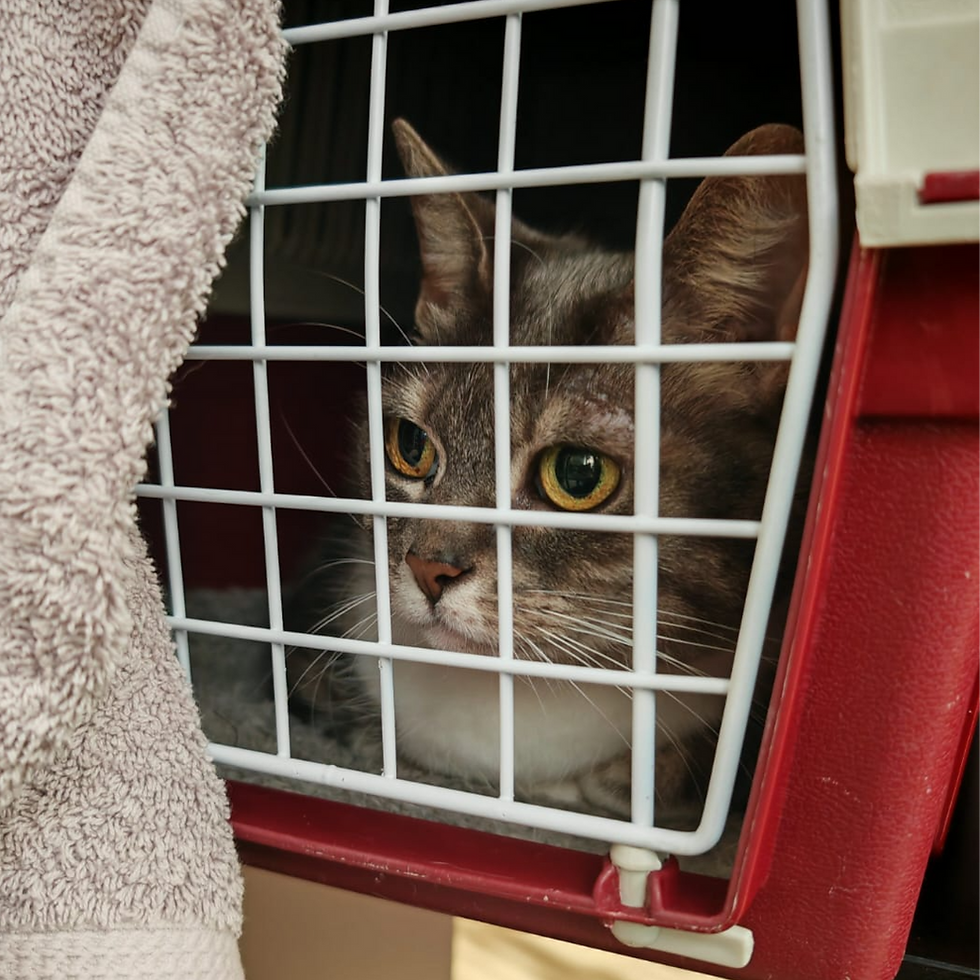
As cats age, health issues start to show up. That's just how it goes. And while we know that cats are particularly good at hiding pain and discomfort, that doesn't make dealing with these things any easier. So, it wasn't a huge surprise when our Mauw, now almost 13, developed thyroid disease. What we didn't expect was that she'd have a severe allergic reaction to the medication prescribed for it.
The past few weeks have been a bit of a rollercoaster, to say the least. We've found a solution, although another hiccup came up along the way that we're now sorting out too. Thankfully, we've had the help and support of the wonderful veterinary professionals we've come to know over the years.
This week, we took Mauw to Utrecht University's Faculty of Veterinary Medicine for a scan and a consultation with a specialist. It was a good conversation, and things are much clearer now. We know what path to follow, and we're on it.
Mauw is back home, feeling better with the right treatment, and we're keeping a close eye on her. We're incredibly grateful for all the care, attention and support she's been receiving. But this whole experience also reminded me of something I talk about quite often in my work as a professional cat sitter: the importance of regular senior checks.
On senior checks
Both our girls, Mauw and Muis, have had a senior check every year since they turned seven. A senior check includes the usual veterinary examination, including a dental check, along with blood and urine tests and a blood pressure measurement.
These checks can help detect changes in a cat's health, sometimes before you notice anything is wrong. And that's precisely the point.
Cats are very good at hiding pain and discomfort. It's an instinct that helps them avoid appearing vulnerable, but it also means we can't always rely on obvious symptoms to tell us something is wrong. Your cat might still be eating, grooming, asking for attention and behaving just like they always do, while a health condition is developing in the background. That's why it's so important not to rely on how our cats look or behave alone. Regular check-ups give your vet a better chance of picking up on changes, investigating them and starting treatment before things become more complicated. Your cat should already be having a routine check-up once a year, along with vaccinations and deworming. However, a senior check-up is a more thorough examination.
On why seven is a good age to start
Seven might not sound particularly old for a cat. But cats age relatively quickly, and from around this age, certain health conditions become more common.
Think about how much the lives of domestic cats have changed. Many cats living in our homes today have a comfortable, safe life, with regular meals, warm places to sleep and access to veterinary care. They don't have to hunt for every meal, fight for territory or worry about finding shelter and surviving the elements. Thanks to better nutrition, safer environments and veterinary care, many domestic cats now live well into their teens, and some even reach their twenties. Evolution hasn't suddenly caught up with these extra years of life, though. Living longer doesn't mean cats are immune to the effects of ageing. Their bodies still change over time, and the longer they live, the more likely they are to develop age-related health problems. Which is why it's important to be proactive rather than wait until something seems wrong.
From around seven years of age, conditions such as kidney disease, hyperthyroidism (an overactive thyroid gland), high blood pressure and diabetes become increasingly relevant. And then there's arthritis, another common problem in older cats that deserves more attention than it often gets.
Arthritis can develop gradually, and cats are so good at adapting to discomfort that the signs aren't always obvious. Your cat might jump a little less, take longer to climb the stairs, hesitate before getting onto the sofa or simply become less active.
It's easy to put these changes down to old age. But getting older doesn't automatically mean a cat should be in pain. Cats don't decide to take it easy as they get older. Sometimes, their bodies simply won't give them any other choice! So, keep an eye on how your cat moves, jumps, climbs and gets in and out of their favourite spots. And if you notice a change, don't just assume it's their age. Have it checked out.
Regular senior checks give your vet the opportunity to look for potential health problems, assess your cat's mobility and investigate any changes. They also tend to take a little longer than a routine consultation, allowing more time for a thorough examination and for your vet to pick up on things that might otherwise go unnoticed.
Seven is a good starting point for an otherwise healthy cat. Not because every cat will develop health problems at that age, but because it's a sensible time to establish a baseline and start keeping a closer eye on age-related changes. Your vet can advise you on which checks are appropriate for your cat. And please don't wait until your cat turns seven if you notice something unusual before then. If your cat starts drinking more, loses weight, changes their eating habits or moves differently, get it checked. These changes can have several causes, and it's important to find out what's going on rather than putting them down to ageing.
On the difference early detection makes
In Mauw's case, her thyroid disease was picked up through these regular checks, which meant we could start treatment early. Of course, catching something early doesn't mean everything will be straightforward. As we've discovered, finding the right treatment can involve a few unexpected turns. A diagnosis is only the beginning, and sometimes treatment needs adjusting along the way. But knowing what's going on gives you a good starting point and the opportunity to act.
Once a health condition has been diagnosed, regular monitoring becomes even more important. You need to know whether the treatment is working, whether there are any side effects and whether anything needs to change. That's something to discuss with your vet as part of your cat's ongoing care.
On how often to check in with your vet
An annual senior check is a good starting point, but it isn't necessarily enough for every cat. Some cats may benefit from check-ups every six months, while others with particular health conditions might need monitoring every three months or even more frequently. It depends on the individual cat, their diagnosis, their treatment and how they're responding to it. If your cat has a chronic condition, ask your vet how often they should be checked and what you should be looking out for at home.
I know how easy it is to think everything is fine when your cat seems happy and their daily routine hasn't changed. I've been there myself. But our cats depend on us to notice the things they can't tell us. And sometimes, that means looking beyond what we can see. If your cat is approaching seven, or is already a senior, have a chat with your vet about senior checks. And if your cat is older and hasn't had one yet, there's no reason to put it off.
As for Mauw, she's home, she's feeling better, and we're taking things one step at a time. We're very lucky to have a good veterinary team supporting us, and I'm grateful that we have a clearer picture of what she needs.
If there's one thing I'd really encourage you to do, it's to talk to your vet about senior checks. Don't wait until something seems wrong to start paying closer attention to your cat's health. Let's catch problems early whenever we can.
I'm pretty certain Mauw would approve 😺👍
In the picture: Mauw in her carrier, waiting for her thyroid scan at Utrecht University.


Comments