

On finding the right approach

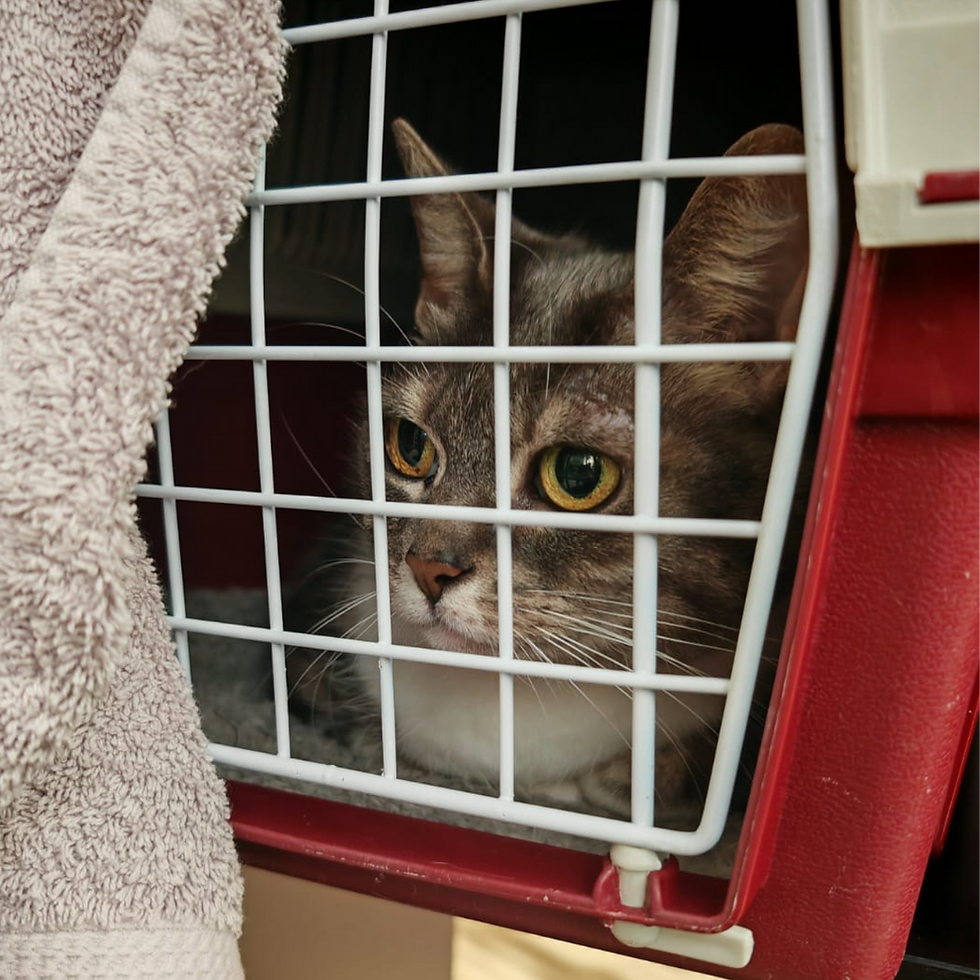
I was ready to leave, but Flinn had other plans... 😓
Cats are individuals, and not every cat will be happy to have a stranger visiting their home. I consider myself an educated and experienced professional, but no matter how many years I've been doing this job or how much training I've had, how nice I am, or how much I like to think I'm a cat whisperer (I don't, by the way), I can't possibly be everyone's cup of tea!
But why do some cats react to their carers? There can be many reasons. They might be scared of strangers, have had bad experiences in the past, feel uncomfortable with changes to their routine, or simply need more time to get used to someone new. Sometimes, pain or an underlying health issue can also play a role. And considering how many cats I care for, who knows how many unfamiliar smells I carry with me!
Whatever the reason, it's not the cat's fault. They're not being naughty or difficult on purpose. They're communicating that something makes them feel uncomfortable, scared or unsafe. It's up to us to listen and respect their boundaries.
The key is knowing what to do when a cat doesn't necessarily want you there. These situations can be tricky and sometimes downright scary. How do you keep everyone safe and calm? How do you make sure you can keep showing up without every visit turning into a Roman circus? And what if the cat is simply scared or uncomfortable and asking you to respect their boundaries? How do you give them that space while slowly building on it?
For me, a successful visit with a potentially reactive cat starts with being honest and communicating with my clients. Before a booking, I want to know about the cat's character, behaviour and past experiences. I ask all my clients to fill in a lengthy form with lots of questions that help me understand the cat's situation and history. During the introductory meeting, we discuss possible triggers and what works best for them. We take the time to talk, and I gather as much information as I can about the home setup and suggest changes that could help me during my visits.
During the booking, I keep the client updated about how things are going. If something isn't working, we discuss what we can change. Afterwards, we can evaluate the experience and consider what might work better next time.
I also adjust my approach. Depending on the cat, that might mean shorter visits, less noise, more space, visits during a quieter time of the day (first thing, for example), clean clothes and shoes, or a separate set of cat-sitting tools. It might mean changing how I move around the house, closing doors or using barriers to move around safely. Or it might mean finding activities that help the cat associate my presence with something positive: games, treats, boxes, feathers... whatever works for that particular cat! I observe their body language, try to understand what they're telling me and work on building a relationship at their pace. I'm not going to force a friendship, but I do want them to feel more comfortable around me.
With Flinn, for example, it took us a while to realise that we both wanted me out of there! 😂 We eventually found the right moment, and I went home. For the following visits, we changed our strategy: a shorter visit to simply leave food and treats out, and a longer visit to take care of everything else, using a door as a barrier while Flinn was busy elsewhere with treats and toys. I kept very quiet and kept my phone silent and away. And you know what? We managed! We didn't become friends, no. That could take a while. But he started to understand that I wasn't there to get him, and he let me do my job. That was enough.
But here's something else that's important: not every cat sitter is the right match for every cat. We all have different personalities and energy levels, and sometimes another carer might simply be a better fit. If I think a cat would feel more comfortable with someone whose energy or approach suits them better, I'll happily suggest another professional. It's not about giving up. It's about being honest and putting the cat's needs first. At the end of the day, what's most important to me is that the cat feels as safe and comfortable as possible, that their humans know they're being taken care of, and that both the cat and I are safe.
Will Flinn and I become friends one day? Maybe. He wouldn't be my first kitty client who became my buddy after a rocky start. I'll keep working on that. Or perhaps I'll simply become a familiar, friendly presence in his life, even if he never considers me friend material. And that's fine! And what if he never likes me? Well, real cat ladies are suckers for one-sided relationships anyway 😬
In the picture: Flinn, not diggin' it.


Comments